
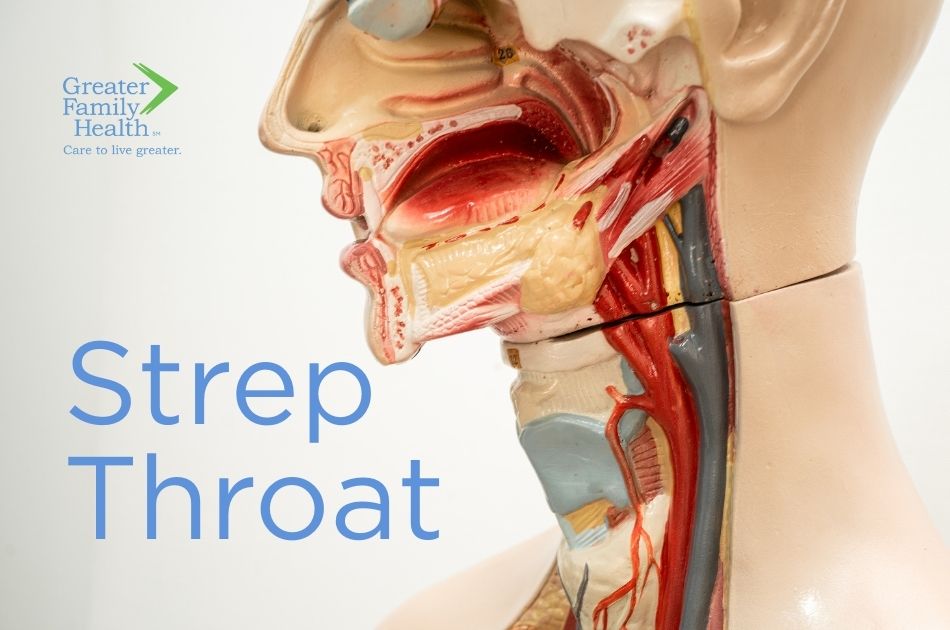
What Is Strep Throat?
Strep throat is a contagious infection of the throat and tonsils caused by a bacteria called group A Streptococcus. While many sore throats are caused by viruses, strep throat is more common in children ages 5–15 but can affect anyone.
Common Symptoms
Symptoms usually begin 2–5 days after exposure and may include:
- Severe sore throat
- Pain when swallowing
- White patches on the tonsils
- Fever
- Swollen glands in the neck
- Headache
How It Spreads
Strep throat spreads through droplets from coughing or sneezing. You are more likely to catch it in close-contact or crowded settings such as:
- Schools
- Daycare centers
- Households
Avoid sharing drinks, utensils, or toothbrushes with others.
Diagnosis
A healthcare provider may diagnose strep throat by:
- Examining your throat
- Performing a rapid strep test
- Sending a throat culture to a lab if needed
If the test is positive, antibiotics will be prescribed.
Treatment
It is very important to take all prescribed antibiotics, even if you feel better before finishing them.
To relieve symptoms:
- Take Tylenol (acetaminophen) or Motrin (ibuprofen) as recommended.
- Drink plenty of fluids (water, Pedialyte, diluted juice, popsicles)
- Get plenty of rest.
- Use a cool-mist humidifier to soothe your throat.
Possible Complications (If Untreated)
If strep throat is not treated, it may lead to:
- Rheumatic fever
- Kidney inflammation
- Other serious infections
Preventing the Spread
- Wash your hands often.
- Cover your mouth when coughing or sneezing.
- Avoid sharing personal items.
- Keep toothbrushes and utensils separate in the household.
When to Stay Home
Stay home from work, school, or daycare until your fever is gone AND you have taken antibiotics for at least 12–24 hours. Our providers can provide a note for work or school if needed.